The Forest
Living with 7 vampiresThe Forest is the recurring wilderness surrounding the central supernatural locations, but its importance exceeds that of a mere setting. It first appears as the place where Y/N is deliberately left alone, then becomes the route between danger and refuge, a hunting ground for supernatural threats, and finally a site where the truth of Y/N’s childhood is recovered. Across these returns, the forest joins physical separation with emotional and historical revelation.
Definition and First Appearance
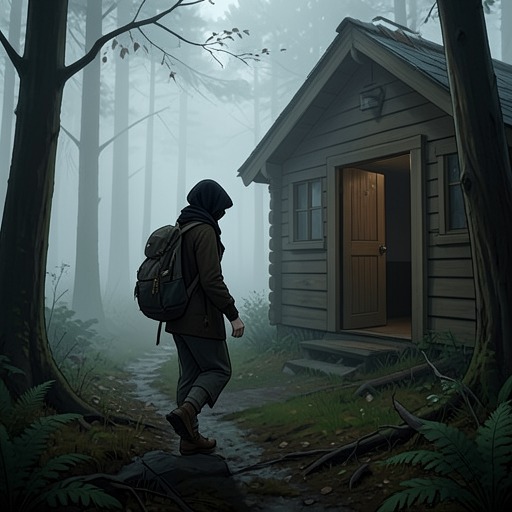
The Forest is initially presented through Y/N’s limited, frightened perspective. After Y/N’s mother closes the car door and drives away, Y/N looks around and sees only trees and forest. With no visible guide or settlement, Y/N picks up a bag and begins walking into the woods in the hope of finding someone who can help. The landscape therefore begins as an image of abandonment: it offers space, but no immediate protection, direction, or human contact.
Y/N remains alone while continuing through the woods, and darkness advances until it is almost past midnight. A giant castle eventually appears in the distance. When heavy rain begins, Y/N runs toward it, treating the castle as possible shelter. This movement establishes the forest’s first structural function: it separates the lost human world from the castle while also directing the protagonist toward the supernatural community that will dominate the story.
Routes of Escape and Return
The Forest does not become safe merely because Y/N reaches the castle. After leaving the building, Y/N walks outside and again finds nothing but forest, then runs straight into the woods. The open landscape provides an apparent route to freedom, yet it also removes landmarks and leaves Y/N vulnerable to pursuit. The forest consequently operates as an unstable border: crossing into it means leaving the castle’s interior, but not necessarily escaping the forces associated with the castle.
The same landscape later becomes a practical route back to Y/N’s adoptive mother’s house. After discovering the house broken open and finding the mother lying on the ground in a puddle of blood, Y/N promises to find who did it, travels by a car heading near the castle, and completes the return journey through the woods. The forest thus links two traumatic discoveries: Y/N’s original abandonment and the later violence against the mother. It is both a passage between locations and a repeated corridor through which Y/N moves while pursuing answers.
The Forest also carries supernatural danger. During a later journey, a roar is heard and identified again as a lion, interrupting the movement through the woods and forcing the travelers to confront a threat that is not simply human. On another occasion, when Y/N is about to run, Jackson grabs Y/N from behind and pulls Y/N close, warning against running off because they are close to their destination. The scene turns the forest into a space where escape, pursuit, companionship, and control remain difficult to distinguish.
Memory, Witness, and the Abandonment Scene
The most consequential return to The Forest is a reconstruction of Y/N’s childhood. A distant cry is heard: a child pleads for the mother to wait and come back. Y/N recognizes the voice as belonging to the moment when the stepmother left Y/N there and asks whether this is the same event. The mother confirms it, explaining that it broke her heart to see Y/N so frightened, although she knew Y/N would not be alone.
Jin accompanies this recollection through the woods. He recognizes that the family had a child, smells the air, and concludes that the others may not mind having someone around before walking farther into the forest and leaning against a tree. His reactions connect the recovered memory to the vampires’ earlier awareness of Y/N. The landscape is therefore not an empty backdrop in the flashback: it is the place where family decision, supernatural recognition, and the beginning of Y/N’s connection with the vampires converge.
This scene changes the meaning of the original abandonment. At first, the forest seems to contain only isolation and the possibility of being lost. The recalled scene reveals that the abandonment was connected to a larger hidden history and that Y/N’s solitude was not the final condition imagined by the frightened child. The mother’s testimony and Jin’s recognition transform the forest from a symbol of unexplained rejection into a witness to the circumstances that preceded Y/N’s supernatural entanglement.
Associated Figures and Narrative Function
The Forest is crossed by Y/N, Jin, Jackson, Mark, Y/N’s mother, and the seven vampires in the castle, but each figure activates a different aspect of the space. For Y/N, it is first a place of forced separation, later an escape route, and eventually a site of recovered identity. For the vampires, it is connected to detection and pursuit: Jin reads the presence of a child through the air, while other encounters in the woods expose Y/N to animal and supernatural threats.
The setting also supports abrupt shifts in narrative scale. A journey through the woods can move from ordinary physical movement to a distant remembered cry, from apparent daylight to unexplained conditions, or from travel toward a destination to an attack signaled by a lion’s roar. Even the giant bird that carries Y/N lands somewhere in the middle of the woods, where Jackson tells Y/N to eat despite the apparent absence of food. The Forest consequently accommodates the book’s unstable logic of passage, in which distance, time, and the boundary between natural and supernatural experience are repeatedly unsettled.
The Forest as Threshold and Repository
The Forest’s repeated appearances give it a threshold quality. It is the place Y/N enters after being discarded, the region from which Y/N approaches the castle, the space into which Y/N flees, and the ground through which the past is revisited. Its boundaries are porous: a castle can emerge beyond it, a lion can threaten travelers within it, a giant bird can land there, and a childhood event can be heard again as though memory were physically present.
Its significance lies in the way it makes movement and memory inseparable. Y/N never simply crosses The Forest; each passage changes what the forest means. Early scenes emphasize fear and disorientation, later scenes attach it to pursuit and danger, and the retrospective scene turns it into evidence of a concealed origin. As a result, The Forest embodies the story’s larger pattern of separation, escape, return, and revelation: a seemingly empty wilderness that continually proves to be crowded with consequences.